
Brand Strategy & Creative Direction in Los Angeles
Give customers a clear understanding of your business, then carry that direction through the way it looks, sounds and presents itself. Fourth Wall helps connect positioning, messaging and creative choices so your website, content and marketing feel like they belong to the same business.

BUSINESS GROWTH
Give people a clear reason to choose you
A customer may meet your business through a search result, a social post, a recommendation or the front door. Each touchpoint gives them clues about who you serve and what they can expect. When those clues are inconsistent, the customer has more work to do.
Brand strategy brings the important decisions into focus: which audience matters, what they value, how your offer fits and which differences you can genuinely support. Creative direction turns that foundation into choices people can recognize. Together, they give your team a more useful starting point for the next website page, campaign or piece of content.
LOS ANGELES PERSPECTIVE
Connect the message to the customer experience
A useful brand direction starts with something true about the business. If customers value careful explanation, that should influence the language on the website, the subjects chosen for content and the way services are introduced. If the experience depends on craftsmanship, the visual direction needs room to show the details of the work.
These choices become more useful when they work together. Positioning helps decide what to emphasize. Messaging makes it understandable. Creative direction makes it recognizable across the places customers encounter you.
Before changing a logo or choosing a new palette, identify what the existing brand already does well and where it creates confusion. That gives the creative work a purpose and helps the team evaluate ideas against something more useful than personal taste.
WHAT WE DO
What your project can include.
Understand the Audience and Their Decision
List the customers you want to reach, the questions they ask and the alternatives they compare. Separate what you know from assumptions that need checking.

Define a Position You Can Support
Choose the differences you can demonstrate through your offer, expertise or customer experience. Use those facts to decide what the brand should emphasize.
Turn Strategy into Practical Messaging Choices
Turn the position into a clear business introduction, service messages and voice guidance. Confirm which visual assets and applications belong in the handoff.
Bring your message, visual identity and content into one direction that customers can recognize across every channel.
Build a direction your team can use
01
Positioning
Clarify who the business serves, what customers are trying to achieve and the useful difference your offer brings. Ground the direction in facts your team can explain and support.
02
Messaging
Organize the main idea, supporting points and tone of voice. Give the team a clearer way to introduce the business, describe services and answer common questions.
03
Visual direction
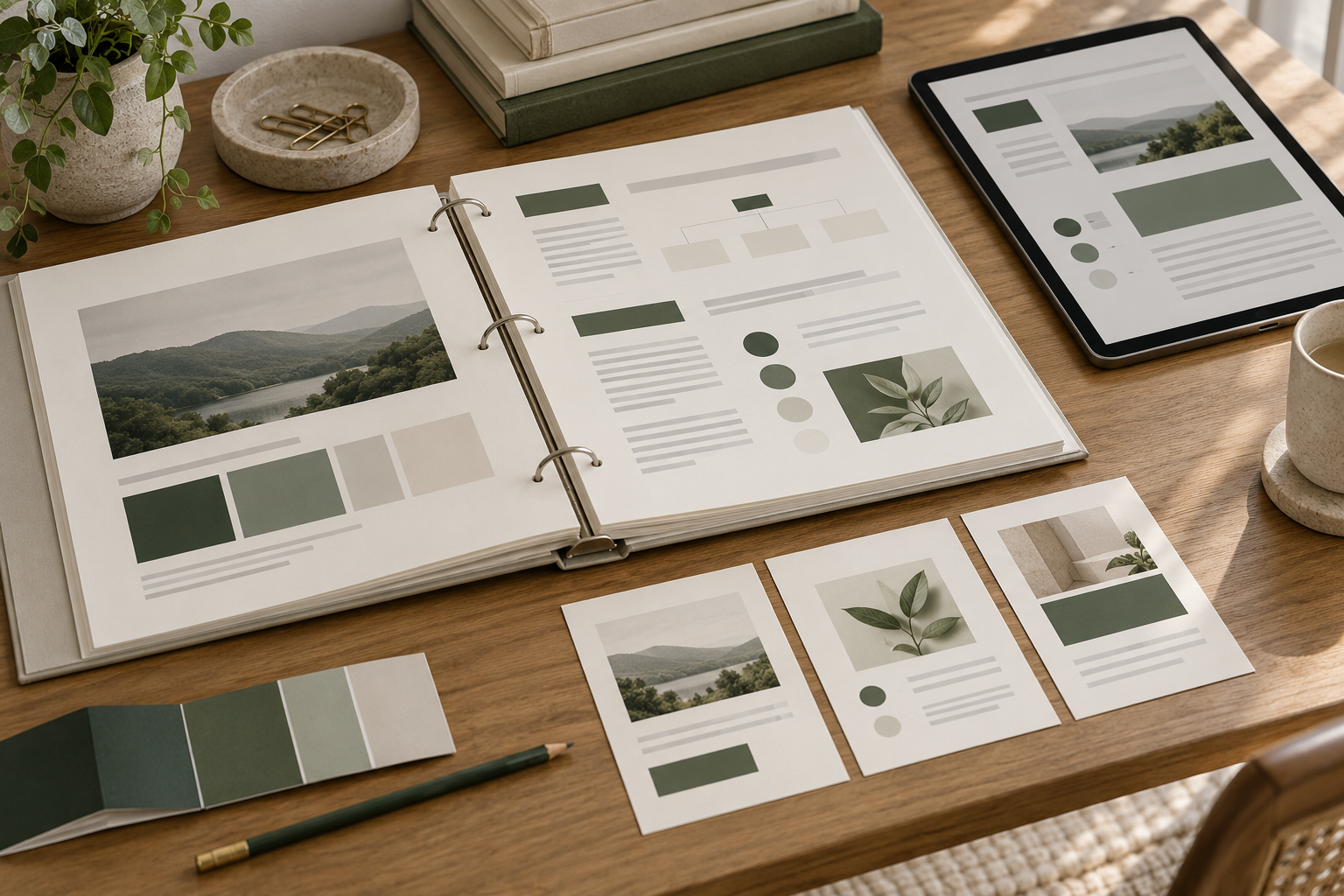
Bring imagery, color, typography and identity choices into a coherent system. Consider the places the brand will appear so the direction works beyond a presentation.
04
Brand guide
Document the agreed principles and how to apply them. A practical guide can help employees, creators and outside partners make consistent choices as new material is produced.
05
Priority applications
Choose the touchpoints that need the direction first, such as a website, social content or marketing material. Agree the examples and production work needed for the rollout.
From a business conversation to a shared direction
01
Understand the business
Review the offer, audience, customer questions and existing materials. Identify what is working, where the story becomes unclear and which decisions matter most to the next stage.
02
Define the foundation
Develop the position and core messages. Your team helps check that the direction reflects the actual business and gives customers a relevant reason to pay attention.
03
Develop the creative direction
Explore how the agreed foundation should look and sound. Review the direction in the context of real touchpoints, with clear feedback and approval responsibilities.
04
Document and apply
Bring the agreed decisions into the brand guidance and applications included in the scope. Clarify what the team can use next and which rollout tasks need separate planning.
Illustrative planning example. This is not a client project or a reported result.
Example: a brand decision sheet
For a small-group fitness studio, a working brand brief could record:
• Audience: people new to training
• Customer question: will I know what to do in the first session?
• Message: explain the coaching and first-session format
• Visual direction: show the coaching environment and participation
• Applications: homepage introduction, service description and welcome message
The business would verify those details before the direction is used.
LOS ANGELES PERSPECTIVE
Speak to the people your business can actually serve
Los Angeles is not one customer group. A business serving nearby appointments may need a different introduction from a company working across a wider service area. The brand should reflect the people you want to reach, what they need to understand and the experience you can deliver.
Useful local context starts with your real customer relationships and operating footprint. It might influence the questions the website answers, the settings shown in photography or the way you explain availability. It should add relevance to the message without relying on a list of neighborhood names.
Choose the right starting point
A focused refresh
Useful when the business has a clear position but the message or visual execution has become uneven. Start with the specific touchpoints that cause confusion and preserve the elements that still work.
A broader brand foundation
Useful when the audience, offer or direction is changing, or the business has never agreed on a consistent position. Start with the strategic choices before extending the creative work.
Bring the materials and questions you already have
• Your current website, logo and a few recent marketing examples
• Common customer questions and the differences you believe matter
• Any upcoming launch, website project or content work that needs direction
Questions about brand strategy and creative direction
How is brand strategy different from a logo project?
Brand strategy clarifies the audience, position and messages behind the business. A logo is one part of its visual identity. Depending on your goals, the project may involve strategic work, creative direction or specific design applications. Those parts should be agreed together so you know which decisions and deliverables the scope covers.
Can we keep parts of our current identity?
Yes, an existing identity can be the starting point for the conversation. Review what customers already recognize, what still reflects the business and what is causing confusion. A useful direction may preserve strong elements while improving how they are applied. The extent of any visual changes is a project decision.
What goes into a brand guide?
A guide records the decisions your team needs to use consistently. Depending on the scope, it can cover positioning, key messages, tone, visual direction and examples of application. The right level of detail depends on who will use it and the kinds of material they need to create.
How will our team be involved?
Your team provides the business context, customer knowledge and feedback needed to shape an accurate direction. Before work starts, identify the people who should contribute and the person responsible for approval. Clear review responsibilities help feedback stay connected to the agreed goals.
Which files and applications will we receive?
The handoff depends on the agreed deliverables. Confirm the required file formats, editable assets, usage rights and any licensed fonts or imagery before the scope is finalized. Website production, social templates, print pieces and other applications should be listed explicitly rather than assumed to be included.
What determines the size and timing of a brand project?
The starting material, decisions required, number of stakeholders and planned applications all affect the work. A focused refresh has different needs from a new brand foundation. The consultation helps identify those needs so deliverables, review stages and timing can be agreed around the project.
Carry the direction into the places customers see
Website Design & Development
Apply the brand to a website that clearly introduces the business and guides visitors toward the right next step.
Social Media Content Production
Turn the direction into an agreed collection of images, videos and content ideas for your channels.
Marketing Strategy & Planning
Connect the brand to channel priorities, customer journeys and a practical sequence of marketing work.
What should people understand about your business?
Bring your current materials, the questions you are working through and what is changing next. We can discuss where a clearer brand direction would be most useful.